How to Read Water Conditions Before You Paddle
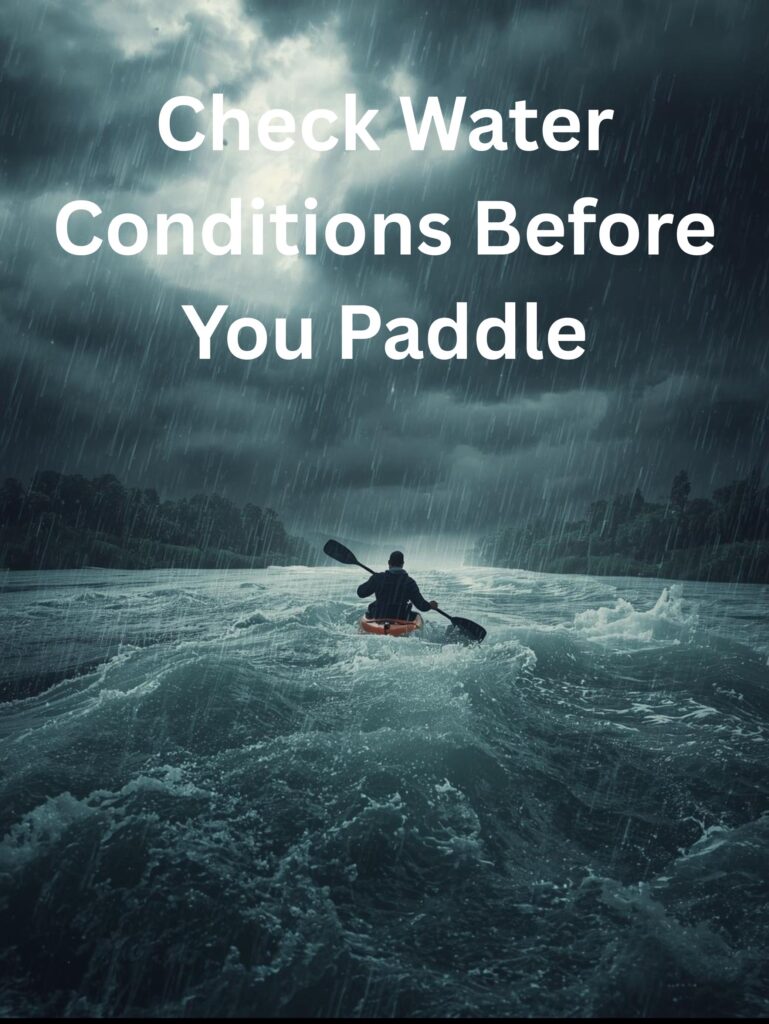
When I first started kayaking, I’ll admit—I didn’t pay much attention to the water itself. If it looked calm from the shore, I figured I was good to go. Big mistake. A few rough outings taught me that reading water conditions is just as important as having the right gear. Knowing what to look for can save you from exhausting paddles, unexpected currents, or even dangerous situations.
Checking Wind and Weather
One of my earliest lessons came on a “perfect” sunny day that turned into a windy nightmare. I launched without checking the forecast and spent the whole return trip paddling against gusts that felt like hitting a wall.
Tip: Always check wind speed and direction before you go. Calm water can turn choppy fast, and wind blowing against your route back makes for a brutal paddle.
Watching the Current
I once set out on a river that looked gentle, only to realize too late that the current was way stronger than I expected. Going downstream was a breeze—getting back upstream was another story.
Tip: Pay attention to the flow of the water. Toss in a stick or leaf and see how fast it moves. On rivers, know where the put-in and take-out points are, and don’t underestimate how currents change after rain.
Reading the Surface
The surface of the water tells a story if you know how to look. I learned this after paddling straight into a patch of hidden rocks because I didn’t notice the ripples breaking differently over shallow areas.
Tip: Glassy, calm water usually means deep and easy paddling. Ripples, swirls, or white patches often signal obstacles, shallow spots, or shifting currents.
Tides and Timing
If you paddle near the coast, tides can make or break your trip. I once launched at low tide and spent half my time scraping the bottom.
Tip: Check the tide charts before you go. Planning your trip with the tide can make paddling smoother and safer.
Final Thoughts
Reading water conditions might feel overwhelming at first, but trust me—it gets easier with practice. Start by paying attention to wind, current, and surface clues. The more time you spend on the water, the more natural it becomes. And once you get it, kayaking feels less like a gamble and more like a smooth, confident adventure.